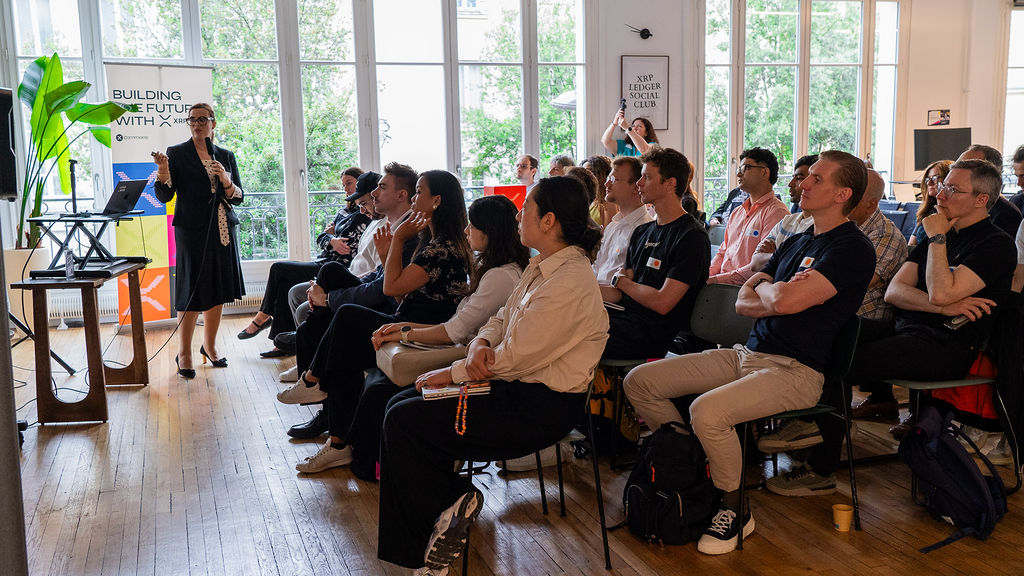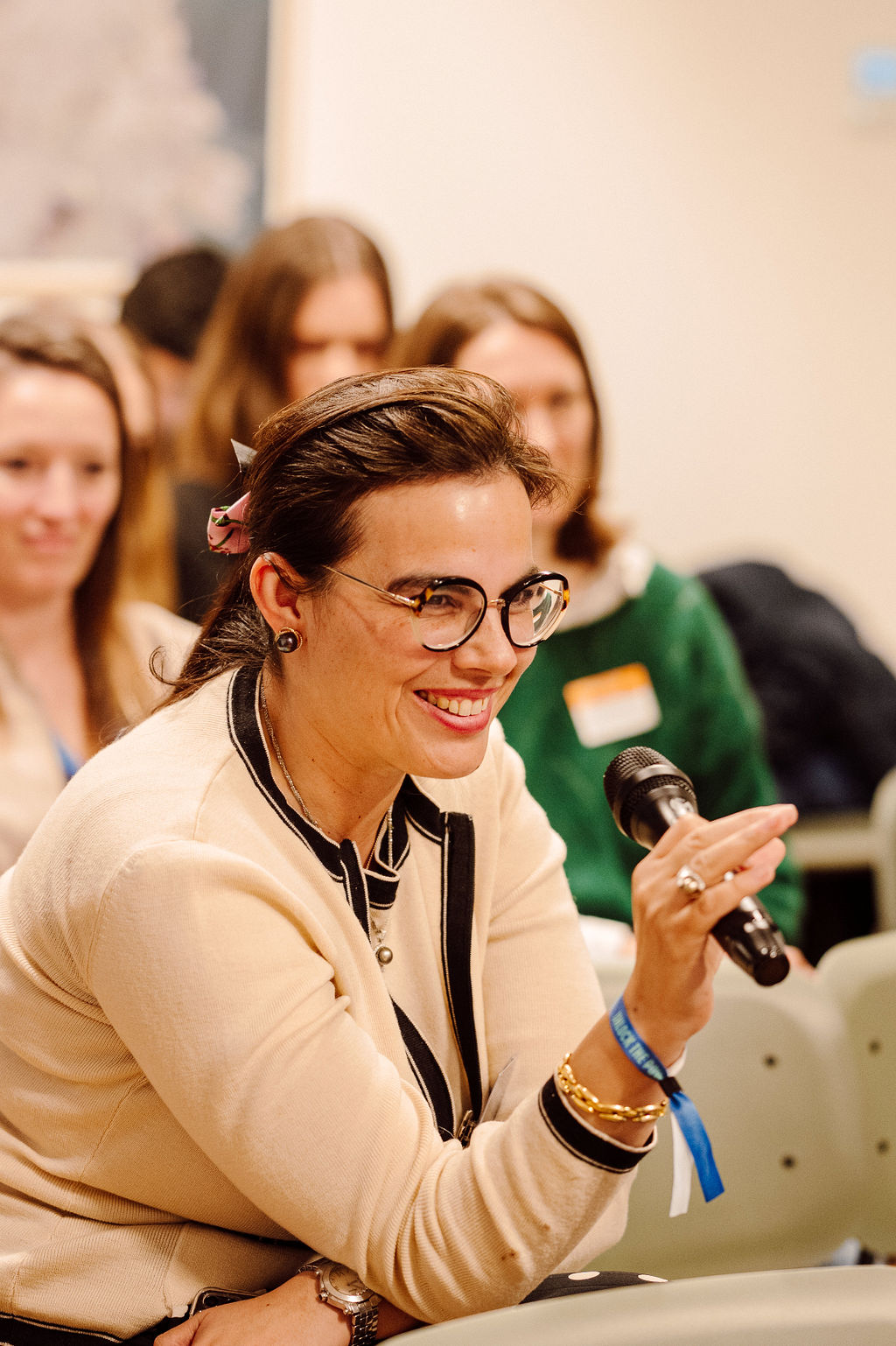
With a background in international relations and child protection, Vera brings experience in academia and international policy to leading our LEARN pillar, supporting blockchain education across universities and research institutions worldwide.
Tell us about your background.
I’m originally from Bulgaria and moved to France about twenty years ago to study. I trained in international relations, specialised in child protection, earned a Master’s at the London School of Economics and a PhD in political science. I’ve taught at Sciences Po Paris for about ten years and previously worked at the OECD on anti-corruption in the Global Relations team.
What experiences do you bring into your role at XRPL Commons?
Teaching and working in international organisations showed me how institutions operate. Academic change is slow, but higher education strongly shapes long-term thinking. That perspective is essential when working with academic partners in an emerging field.
Why did you join XRPL Commons?
I met David when XRPL Commons was still being built. I’m not a “tech nerd,” so it was outside my comfort zone, but the direction and values were convincing.
“What ultimately mattered was the people involved, the nonprofit approach, and the belief the technology could serve broader social impact.”
Why is education such an important pillar?
Universities are complex yet central to shaping future professionals. Blockchain isn’t an obvious academic subject, making education both challenging and necessary. We adapt to institutional realities rather than impose solutions, building trust and collaboration. We bring developers into classrooms, and some of our strongest trainers are early-career professionals growing with the programmes. XRPL Commons also helped shape European blockchain education standards through the International Association of Trusted Blockchain Applications and supports research through the University Blockchain Research Initiative network of 54 labs. Last year we launched our first CIFRE research contract with University Claude Bernard Lyon 1.
Why are students interested in blockchain?
Students are often ahead of professors, approaching it with curiosity and critical thinking.
“There’s often a strong value dimension—decentralisation, agency, alternatives to Web2.”
They see blockchain not as an end but as a tool for broader social and economic questions.
How does your child protection background relate?
It pushes me to connect fields that don’t naturally overlap. I focus on online child protection, including sexual abuse and AI-related risks, and see potential for blockchain in research and long-term policy responses.
What are you most focused on this year?
A key priority is launching the XRPL Academy, a unified open hub with podcasts and a live online library. We’re expanding training formats—from two-day developer intensives to online programmes like the Core Developer Bootcamp launched last year. In June we’re hosting a two-day Blockchain Research Summit in Paris with UBRI and Lyon 1 University, gathering researchers, academics, industry, and EU partners, followed by a published manual of outcomes.
“Students don’t see blockchain as the solution itself. They see it as a tool to address larger problems.”



.jpg)